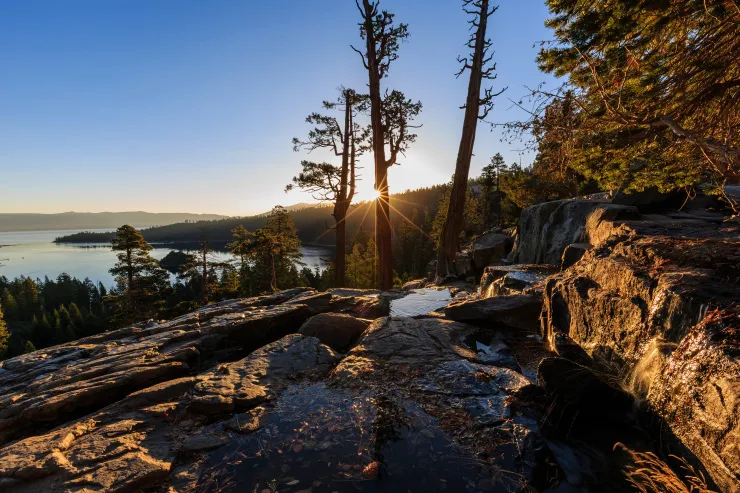
Weather is one of the first things people ask about when considering a move to Reno or Lake Tahoe. The short answer is this: you get four true seasons, over 300 days of sunshine, and access to both high desert and alpine climates within minutes of each other. It is one of the reasons so many people feel energized living here.
Reno sits in the high desert at about 4,500 feet in elevation, while Lake Tahoe rests higher in the Sierra Nevada mountains. That elevation difference creates distinct seasonal experiences depending on where you live, work, and spend your time.
RENO WEATHER THROUGH THE SEASONS
Reno experiences four distinct seasons without the extreme humidity found in many other parts of the country. Summers are warm and dry, with average July highs around the low 90s. There are occasional triple digit days, but low humidity often makes the heat feel more manageable.
Fall brings cooler evenings and clear skies. Winter in Reno includes snow, but much of it melts quickly in town. Average annual snowfall is around 20 inches, primarily between December and March. Spring can feel unpredictable, sometimes teasing warmer temperatures before winter makes a brief return.
Reno averages about 7.5 inches of rain annually and enjoys approximately 300 days of sunshine each year.
LAKE TAHOE WEATHER AND ELEVATION DIFFERENCES
Lake Tahoe sits at over 6,200 feet in elevation, which means cooler temperatures year round compared to Reno. Summers are typically milder, making Tahoe a popular escape during hotter Reno afternoons.
Winter in Tahoe brings significant snowfall, creating ideal conditions for skiing, snowboarding, and other winter recreation. Snow totals vary each year but are substantially higher than Reno’s valley accumulation.
The elevation difference allows residents to choose their preferred climate experience. You can live in Reno and drive into a winter wonderland in under an hour.
HOW WEATHER SHAPES THE RENO TAHOE LIFESTYLE
Weather here is not just a talking point. It shapes how people live. Sunny days make outdoor recreation part of everyday routines. Snow in the mountains fuels winter sports while the valley often remains accessible and functional.
You can ski in the morning and return to clear roads in town by afternoon. You can paddleboard in summer and enjoy crisp autumn hikes without heavy humidity.
The balance between accessibility and seasonal variety is what makes Reno and Tahoe weather appealing to so many relocating families.
IS RENO OR TAHOE TOO HOT OR TOO COLD
Reno summers are warm but dry. Tahoe summers are cooler and comfortable. Reno winters are manageable with lighter snow accumulation, while Tahoe winters are snowier and more alpine.
For many residents, this variety is the appeal. You are not locked into one climate. You have options within driving distance.
WHAT TO KNOW BEFORE MOVING
If you are moving to Reno or Tahoe, it is helpful to consider elevation, commute routes in winter, and how seasonal changes might affect daily life. Snow removal, wildfire season, and occasional wind are factors to understand.
Overall, the Reno Tahoe region offers a climate that supports year round activity without extreme weather patterns dominating daily life.